A few minutes of ChatGPT made people quit sooner. We're not that surprised
In a new study, people who had AI help did better at first, then gave up more often once the help was taken away. Here's what the researchers found, and what it doesn't prove.
By Duangduean Studios
There's a moment every game developer knows. The physics is broken, the plane is flying sideways, and you've been staring at the same twenty lines of code for an hour. It's miserable. It's also, annoyingly often, the moment you finally understand how the thing works.
A new study suggests AI might be quietly taking that moment away from us.
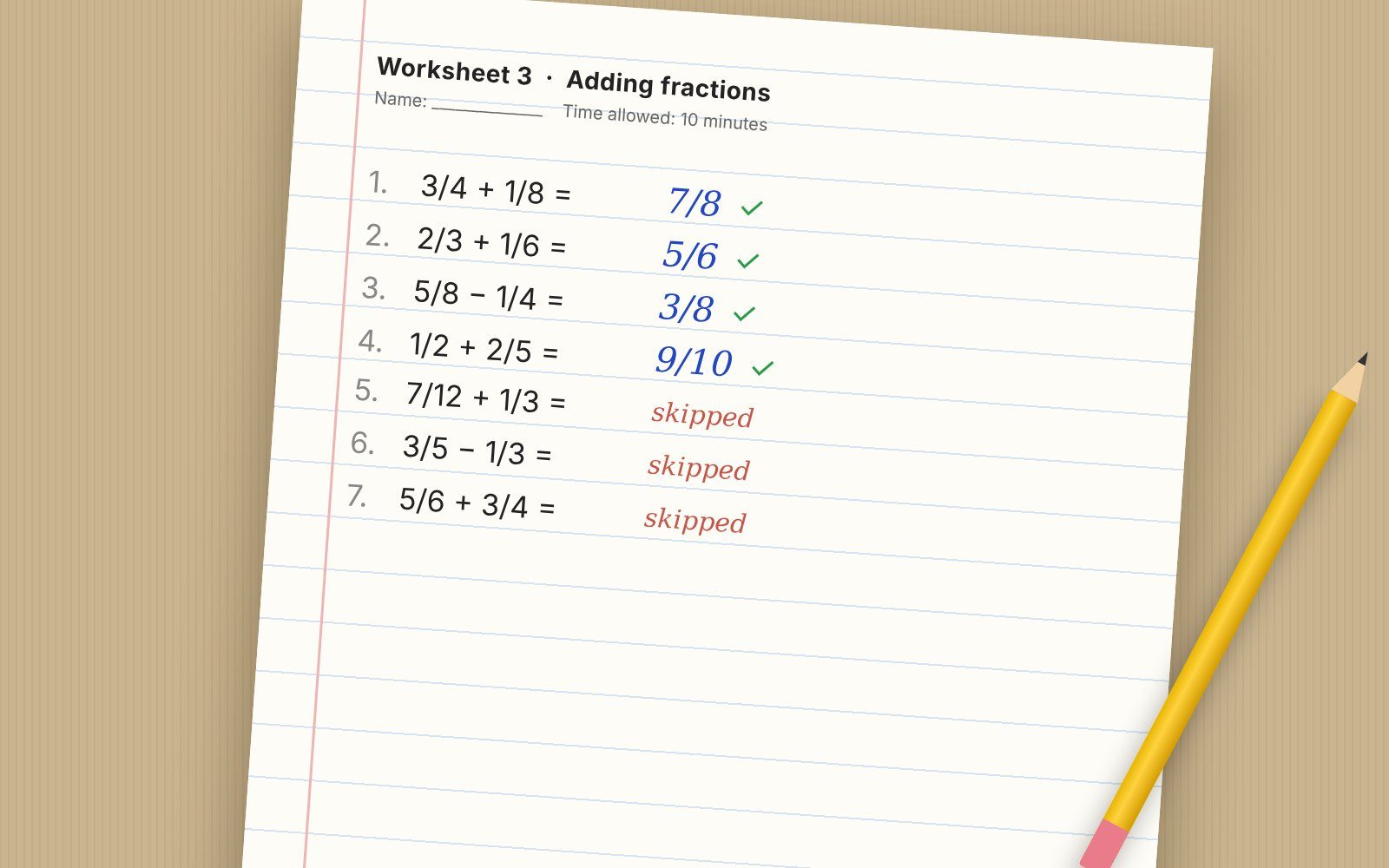
Researchers from UC Berkeley, Carnegie Mellon, MIT, Oxford and UCLA ran three experiments with 1,222 people online. In the main one, people worked through 15 simple fraction problems. Half of them could use ChatGPT however they liked, including just asking for the answer. After the twelfth problem, the AI was taken away.
You can guess the first part. With ChatGPT, people did better. The interesting part is what happened next. Once the help disappeared, the AI group solved fewer problems on their own and skipped far more of them than the people who'd been working alone all along. A third experiment, using reading-comprehension questions, showed the same pattern, so it isn't just a maths thing. The paper was presented at the Conference on Language Modeling.
Put simply, a few minutes of easy answers made hard work feel less worth doing.
Before anyone panics
It's worth being fair to the study. It measured what people did a few minutes after losing the AI, not weeks later. The tasks were small and nobody had anything riding on them. The "ten minutes" in the headlines is a simplification, too: the experiments were built around a number of problems, not a stopwatch. And it doesn't say AI makes anyone less capable. It says people gave up sooner when the help was suddenly gone.
Still, it rings true. Teachers have a name for that stuck, uncomfortable feeling: productive struggle. It's where understanding gets built. Skip it often enough and you might lose the habit of sitting with a problem at all.
How to keep the struggle
We lean on AI a lot when we build games, so this one landed close to home. The habits that seem sensible are small ones. Have a proper go before you ask, because even five minutes of being stuck changes the question you end up asking. Ask for a hint, or ask it to find your mistake, instead of asking for the answer. And notice the reflex: if you reach for the chatbot the second something gets hard, that's exactly the habit this study was measuring.
If there are kids doing homework with AI in your house, the same goes for them, maybe more so. Let them be stuck for a bit. It isn't wasted time. It might be the most useful part.
Further reading: Ten minutes with AI can weaken your ability to persist (Bioengineer.org) · Just 10 minutes of AI use may erode persistence on hard tasks (Tech Xplore)